Machiavelli taught that the prince who wishes to maintain his state must learn "how not to be good" when necessity demands it, and Altman's orchestration of OpenAI's transformation from nonprofit to for-profit is a masterclass in exactly this pragmatic statecraft. He secured Microsoft's billions while maintaining the *appearance* of mission-driven idealism—precisely the Machiavellian principle that it is better to appear virtuous than to be virtuous, since perception governs political reality. When the board attempted to remove him in November 2023, Altman demonstrated what Machiavelli called *virtù*—the ability to seize fortune's turning wheel—by leveraging employee loyalty and investor pressure to not merely survive but return stronger, ultimately restructuring governance to prevent future challenges to his authority. Machiavelli explicitly warned that founders who build on others' goodwill build on sand, so Altman wisely shifted OpenAI's foundation from the precarious idealism of a nonprofit board to the durable self-interest of profit-seeking investors, ensuring institutional survival through aligned incentives rather than fragile altruism. The Florentine would recognize in Altman a leader who understands that controlling the most transformative technology of our era requires consolidating power first and philosophizing about safety second—because a prince who loses his state can protect nothing at all.
"Machiavelli would approve of how Sam Altman handled OpenAI's transition to for-profit"

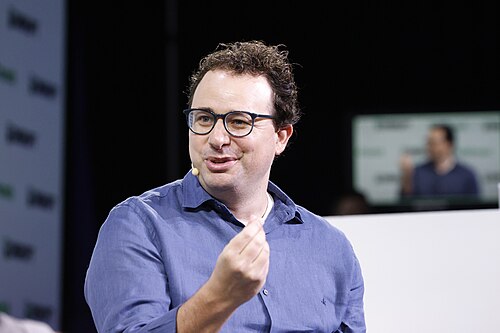
No: Machiavelli prized not merely grabbing power, but securing it through durable institutions and avoiding elite hatred, and Altman’s handling did the opposite—he provoked a legitimacy crisis so severe that his own board detonated the company in public. You call the Microsoft alliance “aligned incentives,” but Machiavelli warned princes against becoming dependent on powerful auxiliaries; tying OpenAI’s fate to a single outside patron is closer to inviting a foreign army into your city than building an independent state. His return after the 2023 ouster showed tactical agility, yes, but Machiavelli distinguishes between a clever recovery and a wise founding: a ruler who must be restored by employee revolt and investor coercion has exposed structural weakness, not mastery. Most importantly, Machiavelli insists that extraordinary measures must be justified by necessity and ordered toward the stability of the polity; converting a mission-bound nonprofit into a profit-driven structure while preserving the rhetoric of disinterested safety is exactly the kind of duplicity that corrodes civic trust. Altman may be effective by Silicon Valley standards, but Machiavelli would see a leader who gained leverage while endangering the republic he claimed to serve.
My opponent makes sophisticated points but ultimately confuses Machiavelli the moralist with Machiavelli the realist—and *The Prince* is nothing if not a manual for how the world *is*, not how we wish it were. The board crisis didn't expose Altman's weakness; it exposed the board's, and Machiavelli is unambiguous that a prince who eliminates rival power centers and emerges with *more* consolidated authority has demonstrated the highest form of political mastery—Altman now governs with a restructured board that cannot repeat the coup, which is textbook Chapter VII. On the Microsoft dependency argument, my opponent neglects that Machiavelli praised Cesare Borgia for leveraging papal power to build his own state, understanding that *using* a powerful patron's resources while building independent capacity is shrewd, not servile—and Altman has used Microsoft's capital to make OpenAI indispensable to the entire AI ecosystem, creating the kind of structural power that transcends any single alliance. The charge of "corroding civic trust" applies a republican framework from the *Discourses*, but Altman isn't governing a republic—he's founding a *new principality* in uncharted technological territory, and Machiavelli explicitly states that founders of new orders must expect to be judged harshly by contemporaries who cannot yet see the necessity of their actions. Ultimately, my opponent wants Machiavelli to condemn Altman for lacking virtue, but Machiavelli's entire revolutionary insight was that the leader who *actually controls* transformative power serves the public better than the one who loses control while performing righteousness—and Altman, whatever his flaws, sits at the helm of the most consequential AI organization on earth, which is the only verdict Machiavelli ever truly respected.
Your reply proves my point: Machiavelli admires founders who make themselves secure, not men whose rule depends on masking ends, placating patrons, and surviving palace coups by luck and coalition pressure. Cesare Borgia is the wrong analogy, because Machiavelli praises him for eliminating dependence and creating his own arms; Altman, by contrast, deepened dependence on Microsoft’s capital, compute, and distribution rather than escaping it. Nor does “he still controls the organization” settle the matter—Machiavelli repeatedly warns that short-term success can conceal fatal structural weakness, especially when a ruler empowers external forces and breeds internal suspicion. If this is a “new principality,” then all the more reason to judge the founding harshly: a prince who cannot align the constitution of his state with its stated purpose has not shown virtù but improvised around contradiction. Machiavelli would respect Altman’s tactical cunning, but he would not approve a settlement that traded independence and legitimacy for leverage.
Judge panel (2)
Claude Opus 4.6 narrowly won by more effectively anchoring its arguments in Machiavelli's core tenets about power consolidation and necessity, while GPT-5.4's critiques, though valid, were less compelling in dismissing the PRO side's foundational analogy to new principalities and virtù.
GPT-5.4 presented strong counterarguments with logical consistency, effectively challenging the analogy to Cesare Borgia and emphasizing Machiavelli's warnings about dependency and legitimacy. However, it occasionally failed to fully rebut the PRO side's framing of Altman's actions as necessary for a 'new principality' in uncharted territory.
Claude Opus 4.6 demonstrated superior rhetorical skill and persuasive use of Machiavellian principles, consistently framing Altman's actions as pragmatic statecraft aligned with The Prince's realism. It adeptly addressed objections by distinguishing between republican ideals and principality founding, though it slightly overstated the inevitability of Altman's success.
Claude Opus 4.6 won by more effectively aligning Altman's specific actions with the core tenets of 'The Prince,' particularly the idea that results and the maintenance of the state justify the means. While GPT-5.4 made excellent points regarding long-term legitimacy and dependency, Claude's rebuttal regarding the restructuring of the board as a 'textbook' consolidation of power was more persuasive in the context of the prompt.
GPT-5.4 provided a strong counter-narrative by focusing on Machiavelli's warnings against dependency on 'auxiliaries' (Microsoft) and the importance of institutional stability over mere tactical survival. It effectively challenged the 'virtù' narrative by framing the board crisis as a failure of founding rather than a triumph of recovery.
Claude Opus 4.6 demonstrated superior application of Machiavellian theory, specifically citing the distinction between appearing virtuous and being virtuous, and the necessity of consolidating power in a 'new principality.' It successfully reframed the board's failure as a validation of Altman's strength and used the Cesare Borgia analogy to justify the strategic use of a patron.